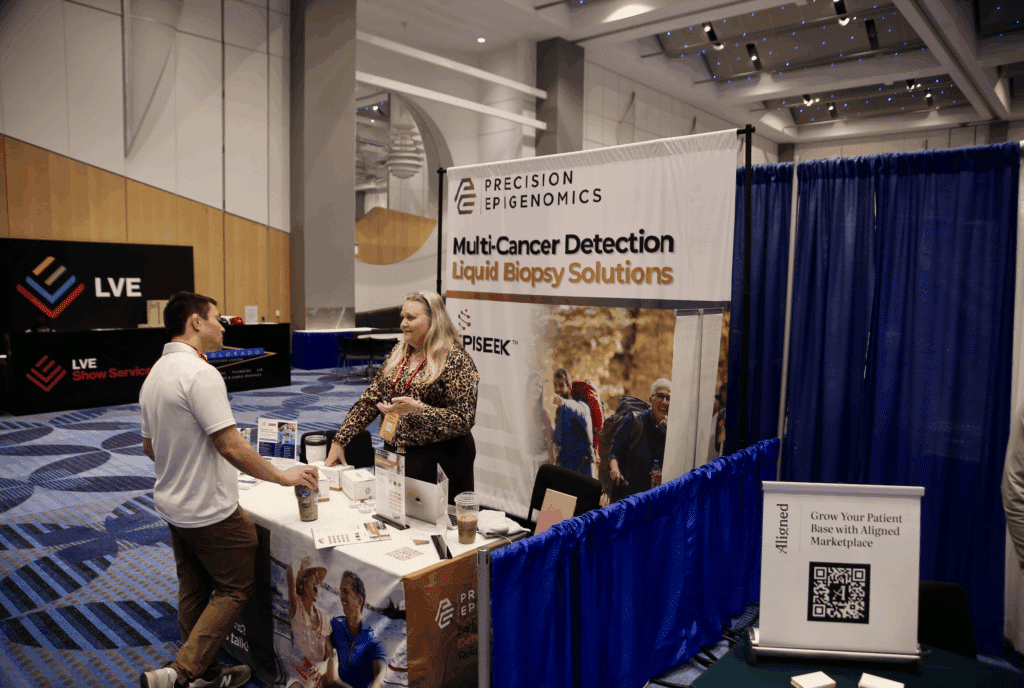
Early Cancer Detection.
Reliable Results.
Proactive screening for 60+ cancer types to help you keep living your best life.*
The EPISEEK® Test detects the most common cancers before symptoms appear.
EPISEEK screens for 60+ CANCERS—more than any other multi-cancer early detection test—and is the only one to screen for brain cancer.
A
Adrenal gland, Pheochromocytoma
B
Bile duct, Cholangiocarcinoma
Bladder, Papillary transitional cell carcinoma
Bladder, Transitional cell carcinoma
Bone marrow, Acute myeloid leukemia with maturation
Bone marrow, B-cell chronic lymphocytic leukemia/small lymphocytic lymphoma
Bone marrow, Plasma cell myeloma
Brain, Glioblastoma
Breast, Neoplasm, malignant
Breast, Lobular carcinoma
C
Cervix, Endometrioid adenocarcinoma
Cervix, Squamous cell carcinoma
Colon, Adenocarcinoma
Colon, Signet ring cell carcinoma
Connective and soft tissue, Dedifferentiated liposarcoma
Connective and soft tissue, Malignant fibrous histiocytoma
Connective and soft tissue, Myxofibrosarcoma
Connective and soft tissue, Myxoid liposarcoma
D
Duodenum, Adenocarcinoma
E
Endometrium, Endometrioid adenocarcinoma
Endometrium, Serous carcinoma
Esophagus, G-E junction adenocarcinoma
Esophagus, Squamous cell carcinoma, large cell, nonkeratinizing
F
Fallopian tube, Serous carcinoma
H
Hematopoietic system, Diffuse large B-cell lymphoma
J
Jaw, Squamous cell carcinoma, keratinizing
K
Kidney, Clear cell adenocarcinoma
Kidney, Papillary adenocarcinoma
Kidney, Renal cell carcinoma, sarcomatoid
Kidney, Renal pelvis transitional cell carcinoma
L
Larynx, Basaloid squamous cell carcinoma
Larynx, Squamous cell carcinoma
Larynx, Squamous cell carcinoma, keratinizing
Larynx, Squamous cell carcinoma, large cell, nonkeratinizing
Lip, Squamous cell carcinoma
Lung, Acinar cell cystadenocarcinoma
Lung, Neuroendocrine tumor
Lung, Non-small cell carcinoma
Lung, Small cell carcinoma
Lung, Squamous cell carcinoma
Lung, Squamous cell carcinoma, keratinizing
Lung, Squamous cell carcinoma, large cell, nonkeratinizing
M
Mouth, Palate squamous cell carcinoma
O
Oropharynx, Squamous cell carcinoma, large cell, nonkeratinizing
Ovary, High-grade serous carcinoma
Ovary, Low-grade serous carcinoma
Ovary, Mucinous adenocarcinoma
P
Pancreas, Ampulla of Vater adenocarcinoma
Pancreas, Infiltrating duct carcinoma
Pancreas, Intraductal papillary mucinous adenoma (IPMN)
Pancreas, Pancreatic neuroendocrine tumor, nonfunctioning
Pancreas, Solid pseudopapillary carcinoma
Peritoneum, Epithelioid mesothelioma
Prostate, Neoplasm, malignant
S
Skin, Amelanotic melanoma
Skin, Nodular melanoma
Skin, Vulva squamous cell carcinoma
Stomach, Adenosquamous carcinoma
Stomach, Tubular adenocarcinoma
T
Testis, Diffuse large B-cell lymphoma
Testis, Germ cell tumor, nonseminomatous
Testis, Mixed germ cell tumor
Testis, Seminoma
Thyroid, Papillary adenocarcinoma
Tongue, Squamous cell carcinoma, large cell, nonkeratinizing
EPISEEK
The Future of Cancer Detection
EPISEEK is a cutting-edge multi-cancer early detection (MCED) test that uses a simple blood draw to identify DNA changes linked to over 60 types of cancer. By detecting hypermethylated DNA loci—i.e., regions consistently altered across multiple cancer types—EPISEEK provides reliable, early detection, even before symptoms appear.
*The EPISEEK test may not identify signals for every type of cancer at every stage. There is a possibility of false positive and false negative results.
How It Works
EPISEEK redefines cancer detection and monitoring, identifying cancer with more specificity than imaging and by being more accessible than invasive tissue biopsies.

Provider Draws Blood

Test Is Sent to Lab

Specimen Is Analyzed

Provider Explains Results
Results in Just 7–10 Days
Who Is EPISEEK For?
The EPISEEK test is recommended for the following :
Individuals at Higher Risk
- Those with a personal or family history of cancer
- Individuals with lifestyle or environmental exposures that increase risk (e.g., firefighters)
Health-Conscious Individuals
- People who prioritize preventive health care and want to take proactive steps to monitor their health
Individuals Aged 45 or Older
Healthcare Providers
- Physicians, oncologists, and general practitioners seeking advanced diagnostic tools to offer their patients
- Clinics and hospitals that want to integrate cutting-edge cancer screening into their services
Researchers and Institutions
- Institutions interested in leveraging innovation technologies for further studies in early cancer detection
Employers or Wellness Programs
- Organizations aiming to enhance employee health benefits by providing access to advanced health screenings
The EPISEEK test is NOT RECOMMENDED for the following:

Individuals who are pregnant

Individuals undergoing active cancer treatment or those with an active known malignancy

Individuals aged 21 years or younger
Talk to your healthcare provider about including the EPISEEK test as part of your annual checkup!
Providers Recommend EPISEEK for Early Detection



Recent Articles